

Causes and Maintenance Solutions for High-Voltage Motor Failures
Release Time:
2023-05-30 19:10
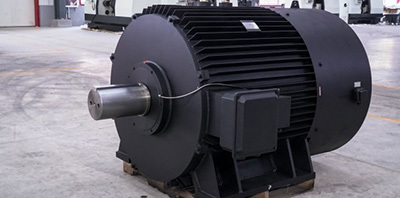
High-voltage motors also have many causes of failure during use. In response to various failures, this article summarizes some treatment methods for failures that occur in daily use of high-voltage motors, and proposes preventive measures to eliminate high-voltage motor failures in a timely manner, so that the failure rate of high-voltage motors is reduced year by year. What are the common faults of high-voltage motors? How should it be handled?
Daily use failure analysis of high-voltage motors: Due to production needs, high-voltage motors are frequently started, with large vibrations and mechanical impact, which can easily lead to failures in the motor circulation cooling system. This mainly includes the following types: 1. Damage to the external cooling pipes of the motor, resulting in the loss of cooling medium, which reduces the cooling capacity of the high-voltage motor cooling system, and the cooling capacity is blocked, resulting in an increase in motor temperature; 2. After the cooling water deteriorates, the cooling pipes are corroded and blocked by impurities, resulting in overheating of the motor; 3. Some cooling heat dissipation pipes have high requirements for heat dissipation function and thermal conductivity. Gaps are left between objects of different materials due to different degrees of shrinkage. Oxidation and corrosion problems occur at the joint position. If cooling water penetrates into it, it will cause a “misfire” accident in the motor, and the motor unit will automatically shut down, causing the motor unit to not work normally.
Common repair methods for high-voltage motors: Supervise external cooling pipelines and reduce the temperature of the medium in external cooling pipelines. Improve the quality of cooling water and reduce the chance of cooling water impurities corroding pipelines and blocking cooling channels. Lubricant staying in the condenser will reduce the heat dissipation speed of the condenser and restrict the flow of liquid refrigerant. For the water leakage phenomenon of aluminum external cooling pipelines, the probe of the leak detector moves near all possible leakage parts. In the parts that need to be inspected, such as each joint and weld, the system is run again to allow the leak detection agent to circulate again, and practical solutions such as stamping, filling, and sealing repair methods are adopted. When performing on-site repairs, glue must be applied to the leaking area of the aluminum external cooling pipeline of the high-voltage motor, which can effectively prevent contact between steel and aluminum and achieve a good anti-oxidation effect.
Recommended Blog
Chengde Shengqian Special Motor Manufacturing Co., Ltd
Contact number: Manager Weng +86-15632496168
Sales Support: 400-6922168
Landline: +86-0314-6902557
QQ: 1804479978
Address: Longcheng Industrial Cluster Area, Yaowangmiao Village, Longxumen Town, Kuancheng Manchu Autonomous County, Chengde City, Hebei Province

Follow us
Copyright © Chengde Shengqian Special Motor Manufacturing Co., Ltd