

Benefits of Replacing Energy-Saving Motor Equipment for Enterprises
Release Time:
2023-05-30 19:13
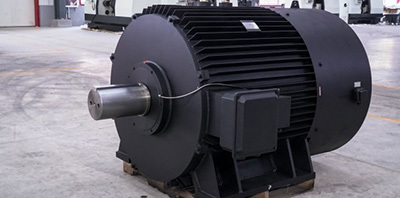
What happens if you use obsolete motors? Using motors that the country has explicitly eliminated will not only result in fines and suspension of use, but the motors will also be confiscated, and in severe cases, it may lead to business rectification, which is not worth the loss. The Ministry of Industry and Information Technology and the State Administration for Market Regulation issued the "Motor Energy Efficiency Improvement Plan (2021-2023)", which proposes to guide enterprises to implement the upgrading of key energy-using equipment such as motors, give priority to the selection of high-efficiency energy-saving motors, and accelerate the elimination of backward and inefficient motors that do not meet the current national energy efficiency standards.
Increase the application of high-efficiency energy-saving motors. Subdivide load characteristics and different operating conditions. For general equipment such as fans, pumps, compressors, and machine tools, encourage the use of motors with energy efficiency level 2 and above. For variable load operating conditions, promote variable frequency speed regulating permanent magnet motors with energy efficiency level 2 and above. The necessity of high-efficiency energy-saving motors in the fan and pump industry. According to statistics, the annual power consumption of fan and pump mechanical equipment in my country accounts for 31% of the country's total power generation and about 50% of industrial power consumption, of which variable compliance operations account for 70%. It can be seen that the speed regulation and energy saving potential of fan and pump motors is very large. From the perspective of economic benefits and energy saving, reducing the power loss during the operation of motors with fan and pump loads is an effective measure and choice to improve the efficiency of the entire system and achieve high-efficiency energy saving.
The necessity of high-efficiency energy-saving motors in the textile industry. According to statistics, textile motors work for more than 7000 hours throughout the year. If energy-saving solutions are implemented, their high-efficiency energy-saving effect will be very prominent. For example, if the motor with a general efficiency of 91.2% is changed to the national standard level 2 energy efficiency of 93.9%, the power is 37KW, and the annual operating hours are 7000h, the annual electricity saving = power 37X (100/91.2-100/93.9) X 7000=9165.5. Moreover, the textile industry has now begun to enter a period of slow development, which is the time to make changes. Choosing high-efficiency motors is a once-and-for-all solution and an effective measure to improve the competitiveness of enterprises.
The necessity of high-efficiency energy-saving motors in the compressor industry: Friends in the compressor industry should all know that the motor on the air compressor, as a direct converter of energy, its energy-saving benefits are even more important. However, many compressor manufacturers are unwilling to use high-efficiency motors because their price is higher than that of ordinary motors, which will increase costs, but this is masking the energy consumption costs with the purchase cost. During the life cycle of a motor, the purchase cost of the motor only accounts for 2% of the total cost, the maintenance cost accounts for 0.7% of the total cost, and the energy consumption cost accounts for 97.3%. In order to improve the operating efficiency of the compressor and reduce energy consumption, it is very necessary to use high-efficiency energy-saving motors.
Recommended Blog
Chengde Shengqian Special Motor Manufacturing Co., Ltd
Contact number: Manager Weng +86-15632496168
Sales Support: 400-6922168
Landline: +86-0314-6902557
QQ: 1804479978
Address: Longcheng Industrial Cluster Area, Yaowangmiao Village, Longxumen Town, Kuancheng Manchu Autonomous County, Chengde City, Hebei Province

Follow us
Copyright © Chengde Shengqian Special Motor Manufacturing Co., Ltd